
After a period of use, many stainless steel dispensers may have colored liquid residues such as tea stains on the surface, and even sporadic floating rust. Many people may mistakenly think that it is a quality problem with the stainless steel material, but in fact, the vast majority of them are not caused by rusting of the material itself, but by long-term adhesion of product stains, accumulation of water on the surface, or the use of incorrect cleaning methods to damage the passivation protective film on the stainless steel surface, resulting in surface pollution. Mastering the correct cleaning and maintenance methods can effectively prevent the residue and rusting of colored liquids, keep the stainless steel distributor clean and shiny, and extend its service life. Here are several cleaning and maintenance methods for stainless steel dispensers:
Stainless steel water dispenser
The stainless steel water dispenser enclosure may splash tea and coffee, and if the tea and coffee are not cleaned in time, it will form real tea stains; In addition, the use of steel wire balls or highly corrosive cleaning agents during cleaning can cause scratches and damage to the passivation protective film, making the stainless steel distributor more prone to dirt adsorption and rusting.
1. Daily cleaning and maintenance of stainless steel water dispensers
Use a soft sponge or microfiber cloth, combined with warm water and neutral detergent, to wipe the surface clean of tea, water stains, and dust; After wiping, rinse with clean water and then completely dry the surface with a dry cloth. Do not let the moisture dry naturally and leave water marks.
2.Treatment of stubborn tea stains and slight floating rust
If you encounter stubborn tea stains or slight rust spots that have already formed, you can use baking soda paste, edible citric acid, or white vinegar soaking treatment.
(1). You can mix baking soda with a small amount of water to make a paste, gently wipe the stained area with a soft cloth in circles, remove the stains, rinse and dry.
(2). Mix white vinegar with warm water, wipe the stained area of the water dispenser, and then clean and dry it.
(3). Dissolve edible citric acid in warm water, soak for 20-30 minutes, and then clean and dry with a soft cloth.
Special attention should be paid to not using steel wire balls, hard scouring pads, bleach, strong acid and alkali cleaners, as these items can scratch the surface of stainless steel, damage the passivation film, and make it easier to accumulate dirt, yellow, and produce floating rust in the future.
3.Daily maintenance suggestions
Good daily habits are the foundation for preventing stains and rust.
Regular cleaning: It is recommended to perform a deep cleaning of the water dispenser liner every 2-4 weeks. If in coastal areas, the water quality may be very hard, so it is recommended to increase the frequency of cleaning appropriately.
Keep dry: After each cleaning or when not in use for a long time, be sure to drain the remaining water from the inner tank and pipes, open the lid for ventilation, and keep the interior dry. This is the most critical step in preventing rust.
Avoid repeated heating: Do not let the water in the water dispenser be heated repeatedly for a long time, as this will accelerate the formation of scale and stains.
Use high-quality water sources: Use purified or filtered water as much as possible to reduce the formation of scale at the source.
Stainless steel tissue dispenser and storage shelves
The surface of stainless steel tissue dispenser and stainless steel storage shelvese to residual mouthwash or iodine, leaving brownish yellow stains.

1. Daily cleaning and maintenance of stainless steel tissue dispenser and storage shelves
Use a soft sponge or soft cloth dipped in neutral dish soap,Wipe along the brushed pattern, rinse thoroughly, and immediately dry with a fish scale cloth or dry towel to prevent water marks.
2. Stubborn stain treatment
(1). Mix baking soda with water to make a paste, apply it to the dirty area and let it sit for a few minutes, then clean it with a soft sponge, and finally dry it with a microfiber cloth.
(2). Use white vinegar solution to soften scale and mineral deposits, and remove stubborn stains. After cleaning, use a microfiber cloth to wipe unidirectionally along the pattern; Use cotton swabs or soft cloth to absorb the accumulated water in the gaps.
It should be noted that the use of hard tools for scraping is prohibited. It is necessary to regularly clean soap stains and dust, keep the surface dry after wiping, and avoid long-term retention of mouthwash or iodine.
3. Daily maintenance suggestions
Check the corners: Regularly inspect the stainless steel toilet paper box, storage shelves welding points, and gaps for residual stains or accumulated dust and water, and clean them in a timely manner.
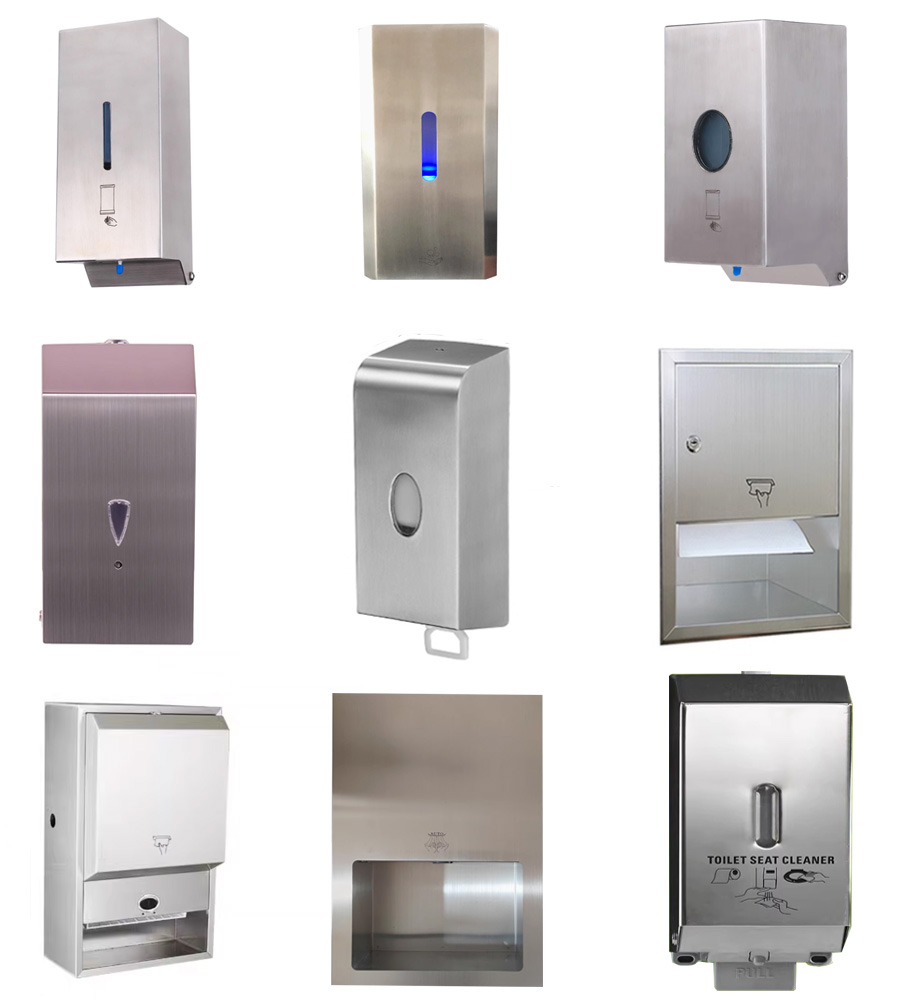
Stainless steel soap dispenser
The soap box pump head and liquid level window of stainless steel soap dispenser are easy to leave stains of hand sanitizer and shampoo with pigment, and the appearance is almost the same as that of tea stains; Long term residue can corrode the surface of stainless steel.
1. Daily cleaning and maintenance of stainless steel soap dispenser
Wipe with a soft cloth dipped in neutral detergent: Use a soft cloth or sponge dipped in neutral detergent to wipe the surface, and use a small brush to clean the pump head outlet. Flush the detergent and foam with warm water to avoid residue. Finally, dry with a dry soft cloth or microfiber cloth without leaving any water marks. This step is the most crucial, as natural drying can easily leave water stains.
2. Stubborn stain treatment
(1). Baking soda paste: You can mix baking soda with a small amount of water to make a paste, gently wipe the stained area in circles with a soft cloth, remove the stains, rinse and dry.
(2). Mix white vinegar with warm water and wipe, then clean and dry.
(3). You mix and dissolve edible citric acid with warm water, soak for 20-30 minutes, and then clean and dry with a soft cloth.
Attention: When cleaning and maintaining stainless steel soap dispenser, it is also forbidden to use hard tools to scrape. It is necessary to regularly clean the soap dispenser housing, pump head, and liquid level window, and keep the surface dry after wiping to avoid the retention of hand sanitizer or shampoo.
3. Daily maintenance suggestions
Thoroughly clean once a week, with a focus on checking whether the soap dispenser pump head and joints have accumulated hand sanitizer, and whether there are any stains or residues on the pressure window.
Soak detachable parts in citric acid or white vinegar solution once a month to dissolve scale and soap deposits.
If not used for a long time, empty the soap solution and dry it thoroughly before storage to avoid internal mold or soap spoilage.
Summary of Maintenance for Stainless Steel Product Cleaning Boxes (Stainless Steel Water Dispensers/ Stainless steel tissue dispenser /Soap Dispenser)
1. Clean up liquid residues in a timely manner: Do not leave tea, coffee, hand sanitizer, shampoo, mouthwash, or iodine on the surface for a long time;
2. Choose the right cleaning tool: only use soft cloth and sponge, reject steel wire balls and hard scouring pads;
3. Choose neutral cleaning agents and avoid bleach and strong acid-base cleaning agents;
4. After cleaning, be sure to dry it dry. Keeping it dry is the most critical step for stainless steel rust prevention;
Once stubborn stains appear, give priority to gentle treatment with baking soda to reduce damage to the surface.
Whether it is a stainless steel water dispenser, stainless steel soap dispenser, stainless steel storage rack, stainless steel tissue dspenser, or other stainless steel products, as long as the correct cleaning and maintenance methods are used, the occurrence of colored liquid residue and rust can be effectively avoided, the surface of the stainless steel can be kept clean, and the service life of the stainless steel dispensers can be extended.



 IPv6-Netzwerk unterstützt


